
Understanding Spectrum design tokens
Concepts · July 10, 2026 · Spectrum Design Data
This is the technical companion to the S2 "Design tokens" page: same shape, but written for people who consume, author, or build tooling around tokens rather than apply them in Figma. Every example below is a real token you can look up on the Tokens page. None of them are illustrative placeholders.
What a token is
A token is a name paired with a value (or a reference to another token). The name is the structured classification of a design decision. The value is the data: a literal, or an alias to another token.
| Token name | Value |
|---|---|
blue-900 |
rgb(59, 99, 251) |
spacing-100 |
8px |
container-padding-medium |
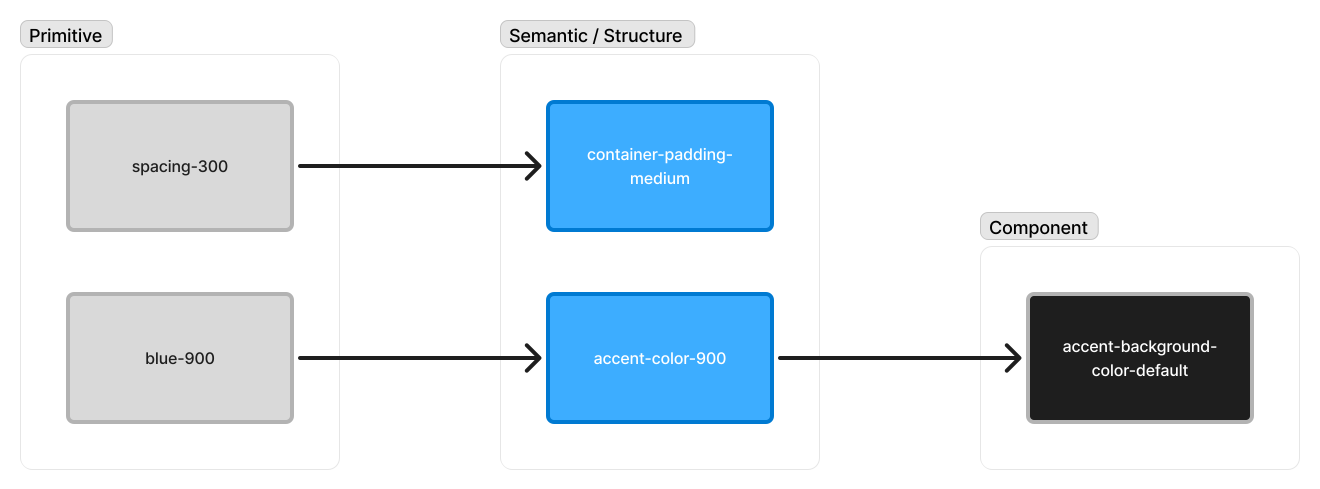
{spacing-300} |
An alias is a token whose value references another token instead of a
literal. container-padding-medium resolves through {spacing-300} to
16px. Each layer adds context without redefining the underlying value.
Three tiers
Primitive tokens define the raw values in the design language and carry little usage context on their own:
blue-900
gray-100
corner-radius-75
spacing-100
Semantic tokens are how most consumers should interact with Spectrum tokens. They describe intent, not implementation, and always resolve back to a primitive:
accent-content-color-default    → {accent-color-900} → {blue-900}
accent-background-color-default → {accent-color-900}
accent-background-color-hover
negative-content-color-default  → {negative-color-900}
positive-background-color-default → {positive-color-900}
informative-background-color-default → {informative-color-900}
positive-color-600
Note the naming convention: state is a suffix (-default, -hover), and the
affected surface is explicit (-content-color-, -background-color-).
There's no bare -text-color- form. Learning this pattern is what makes the
token set searchable.
Component-specific tokens are scoped to one component or implementation, used only when no semantic decision fits:
tooltip-maximum-width      160px (desktop), 200px (mobile)
divider-thickness-small    1px
divider-thickness-medium
divider-thickness-large
Reusable structures
Beyond color and meaning, Spectrum's layout tokens encode where a decision applies, using a small vocabulary of structures that repeat across components:
| Structure | Description | Example token |
|---|---|---|
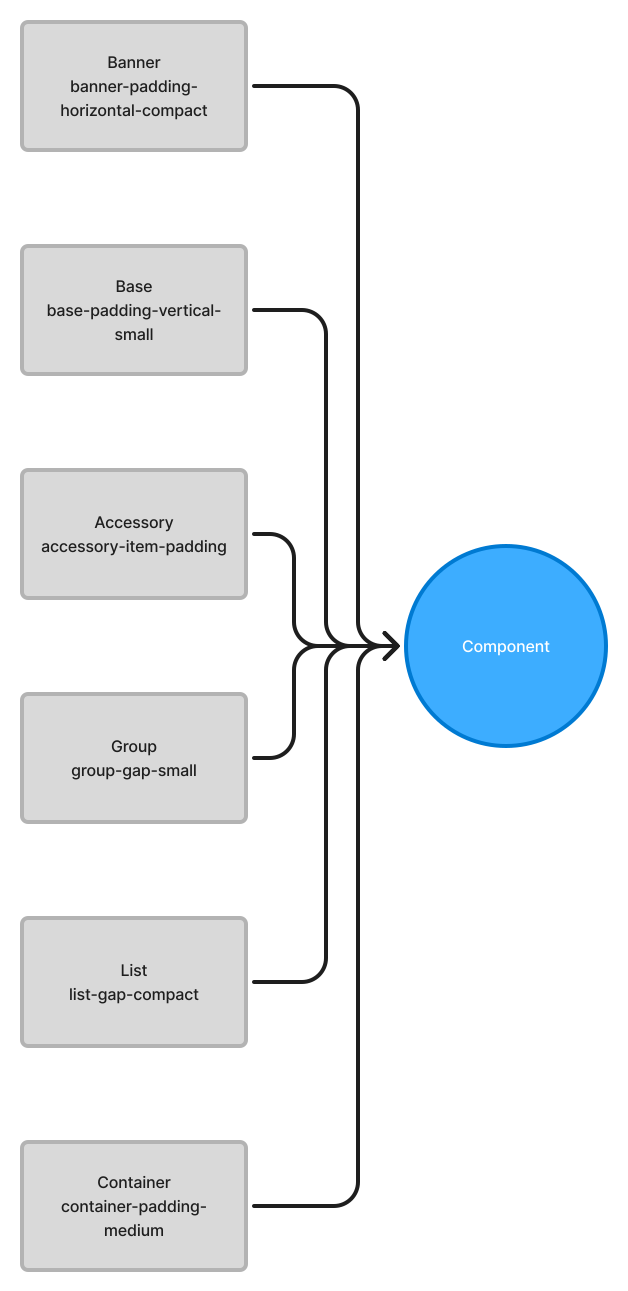
| Base | The primary functional element within a structure | base-padding-vertical-small (4px), base-padding-vertical-large (10px) |
| Accessory | A supporting element associated with another structure | accessory-item-padding-* |
| Group | A collection of related elements | group-gap-small → {spacing-85} |
| List | A sequence of repeated items | list-gap-compact |
| Container | A structure that organizes content | container-padding-medium → {spacing-300} |
| Banner | A structure used for prominent messaging | banner-padding-horizontal-compact → {spacing-100} |
These aren't aspirational. Every prefix above already ships in the legacy token format. Components are compositions of these structures rather than one-off decisions per component, which is why reusing a structure token is almost always preferable to inventing a component-specific one.
Where we're going
Everything above describes the legacy token format in
@adobe/spectrum-tokens, which is what most consumers build
against today. The Spectrum Design Data project is also developing a
successor, the Design Data Specification, that keeps the same principles
(clear, systematic, learnable, semantic-first) but changes how data is
organized and resolved. A few of the bigger shifts, each documented in full
in the Specification:
- The format is moving to a three-layer cascade of Foundation, Platform, and Product, with a defined precedence and specificity model for resolving conflicts instead of each platform maintaining a fully separate token set. See Cascade resolution.
- Token names get a formal taxonomy, so "what does this token mean" is answerable by structure, not convention alone. See Taxonomy.
- The token format itself becomes versioned, with an explicit nested
lifecycleobject (lifecycle.introduced,lifecycle.deprecatedIn,lifecycle.replacedBy) and minimum migration windows, replacing today's more ad hoc deprecation notices. See Token format and Evolution.
None of this changes how you use tokens today. The legacy format keeps shipping, and the migration path is deliberately incremental. But if you're building tooling, adapters, or platform implementations against Spectrum tokens, the Specification is the place to see where the format is headed before it lands.

Further reading
- Tokens: the current token reference
- Specification: the in-progress Design Data Specification
- Spectrum Design Data on GitHub